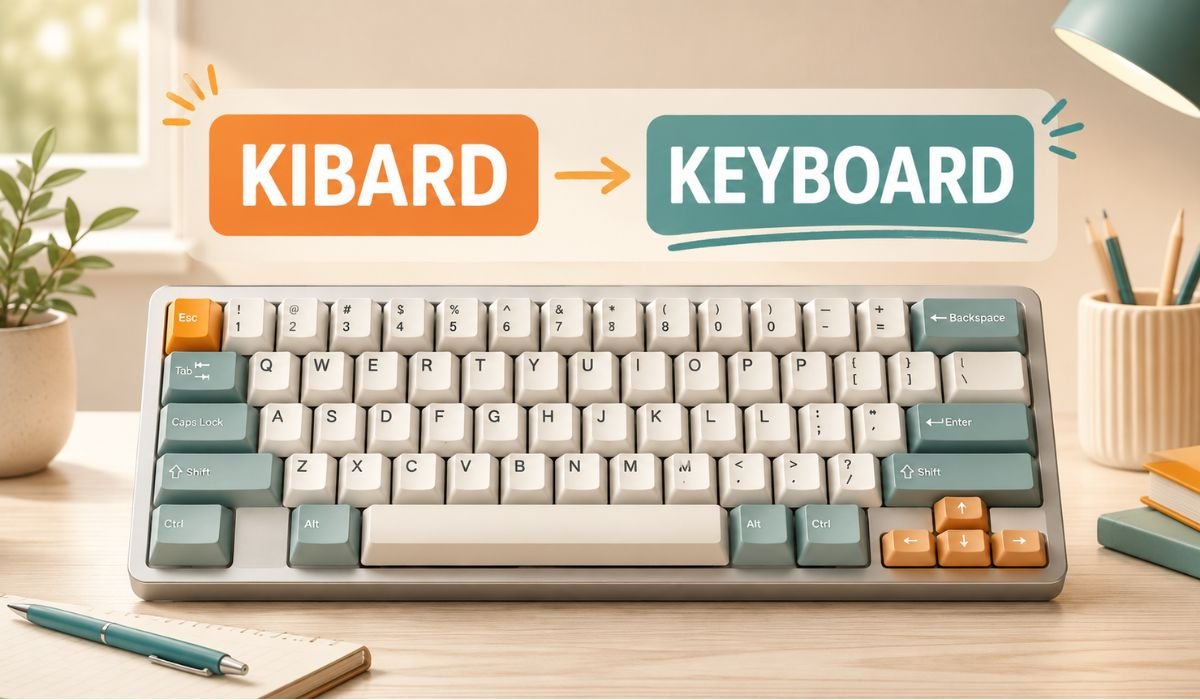
Every day, thousands of people around the world type a word that does not exist in any dictionary. They open a browser, press a few keys in a hurry, and search for “kibard.” The results are about typing devices, computer parts, and buying guides. That is not an error by the search engine but a smart guess based on what people actually want. The spelling has become common enough to work almost like a real search term, even though it started as a slip of the fingers.
This guide explains what kibard means, why it appears so often, and what people are usually looking for when they type it. It also covers the reasons behind typing errors, the role of autocorrect and voice input, and simple steps to stop the mistake from happening again.
What Does Kibard Actually Mean?
In plain terms, the word means keyboard. It is a phonetic misspelling, which means it is written the way the word sounds rather than the way it is spelled. When people speak quickly, “keyboard” can sound close to “kibard,” especially in casual conversation or in a noisy room. The brain hears the sound, fills in the missing letters, and the fingers type what the ear picked up. The result looks wrong on screen, but the meaning behind it is completely clear.
This is not a technical term, a brand of hardware, or a new technology. It has no official definition in English. It is an alternative spelling that shows up when someone types fast, speaks into a microphone, or is unsure how the correct word is written. In almost every case, the person means the standard input device used with computers, laptops, tablets, and phones.
Why This Spelling Shows Up So Often
The reasons behind this typing error are surprisingly logical. It is not carelessness, and it says nothing about a person’s writing skill. It is the natural result of how modern devices, human hands, and speech work together at high speed.
Fast Typing and Muscle Memory
Most people type without looking at their hands. Fingers move through learned patterns instead of checking each letter. On a standard layout, the letters “e,” “y,” “b,” and “i” sit close enough that a rushed hand lands slightly off target. When fingers move faster than the eyes can check, whole letter groups get scrambled, and the result still looks close enough to pass a quick glance.
Typing on a phone makes this even more likely. Touchscreens have no physical edges between keys, so nothing guides a thumb back into place. A small shift of a few millimeters can register a different letter, and many people type one-handed while walking or riding a bus.
Autocorrect and Predictive Text
Autocorrect is supposed to fix mistakes, but it sometimes creates them. Prediction systems guess the intended word after only two or three letters. If the guess is wrong and the user keeps typing, the software may lock in a spelling nobody meant to use. Some systems also learn from past typing, so a repeated error can be treated as a preferred spelling and suggested again.
Voice Typing and Accents
Voice input adds another layer. Speech tools match sound waves to written words, and that job gets harder with background noise, accents, and fast speech. Someone driving or cooking often speaks in short bursts with less clarity than usual, so the software writes down the nearest match it can find. This is one of the most common ways the odd spelling reaches a search bar.
What People Really Want When They Search It
Search behavior tells a clear story. Almost nobody is looking for information about the misspelling itself. They want something practical, and the wrong spelling is just the door they walked through.
Some people are shopping and want to compare models before buying. Others have a hardware problem and need a fix. A smaller group is curious about the word after seeing it online. Others are hunting for typing apps and smart input tools for phones, since a few software products use similar names.
Where the Term Shows Up in Daily Life
The misspelling appears in more places than most people expect, which is part of why it keeps spreading. It travels through messages, search bars, listings, and voice notes, and each setting has its own reason for producing it.
- Work and office tasks: rushed emails, chat messages, and meeting notes typed under time pressure
- Shopping searches: marketplace listings, price comparisons, and reviews written in a hurry
- Gaming and hobbies: forum posts and setup discussions where speed matters more than spelling
- Support requests: help tickets written by people frustrated with a device that stopped working
- Learning and study: notes taken by students typing quickly during lectures
- Casual conversation: social posts and voice-to-text messages sent while walking or driving
Is It a Real English Word?
No. It has never appeared in a standard dictionary and has no accepted meaning of its own. It is best described as a common variant spelling, much like other errors people make with words that have unusual vowel patterns. English is full of words that are not spelled the way they sound, and “keyboard” is one of them. The opening sound follows no obvious rule, which is exactly why it gets rewritten by ear.
That said, kibard has taken on a small life of its own. Because so many people type it, it now appears in web content, product listings, and casual writing. Some businesses have used similar spellings for brand names because short, unusual words are easy to remember. That does not make it correct, but it explains why the word turns up in places where you might expect careful editing.
Understanding the Device Behind the Word
Since the search almost always points to a typing device, it helps to know what that device does. A keyboard turns physical key presses into signals a computer understands. Each key sends a specific code, and the system converts it into a letter, number, symbol, or command in a fraction of a second.
Modern versions come in several forms. Mechanical models use a separate switch under every key and give a firm, clicky feel that writers and gamers prefer. Membrane models use a soft rubber layer and are quieter and cheaper. Ergonomic designs curve or split the layout to reduce wrist strain, while virtual versions appear on touchscreens. Each suits a different budget and comfort level.
How to Stop Making This Typo
This error is easy to prevent once you know where it comes from. Most phones and computers include a personal dictionary or text replacement feature. Add the wrong spelling, set the correct word as its automatic replacement, and the problem is fixed across most apps. It takes about a minute and saves a surprising amount of small frustration.
Small habits help too. Slowing down slightly, glancing at the text field before pressing enter, and speaking clearly during voice input all reduce errors. If you type for hours each day, a better physical device also makes a real difference, since keys with clear feedback tell your fingers when a press has registered.
When the Real Problem Is the Hardware
Many people who type this word are not shopping or curious at all. They are frustrated because their device stopped working. Keys stick, letters do not appear, or the computer does not recognize the unit at all. A simple checklist solves most of these issues faster than a support call.
Start with the basics. Try a different port, swap the batteries, or reconnect the wireless link. Restart the computer, since a held key can confuse the system until everything resets. If the device works on another machine, the fault sits with the computer. Cleaning around the keys with compressed air also fixes many sticky or delayed responses.
Why the Term Keeps Growing
Every year, more people go online for the first time, and most start on a phone rather than a computer. Mobile typing produces more errors than desktop typing, and voice input keeps growing in regions where typing in English is less common. Together, these trends push unusual spellings higher rather than lower.
Search engines have adapted well. They match meaning rather than exact letters, so an imperfect search still returns helpful pages. Because users rarely notice their own mistake, the pattern repeats. The spelling has become a small but stable part of how people search.
Final Thoughts
Kibard carries no mystery once you break it down. It means keyboard, and it exists because human speech, fast fingers, and helpful software sometimes work against each other. There is nothing embarrassing about typing it. Millions of people do the same thing every month, and search tools are built to understand exactly what they mean.
What makes the term interesting is what it reveals about modern habits. We type faster than ever, often with one thumb and usually while distracted. Small errors are the cost of that speed. If the spelling brought you here, you now know the meaning, the cause, and the fix.
Frequently Asked Questions (FAQs)
What does kibard mean in simple words?
It means keyboard. It is a misspelling that people type when they are moving quickly or using voice input. The word has no separate meaning of its own and does not appear in any dictionary. In nearly every case, the person is looking for information about a typing device.
Is kibard a real word in English?
No, it is not a real English word. It is an informal variant that spread through fast typing and speech-to-text errors. Dictionaries and style guides do not recognize it. The correct spelling is always keyboard, no matter the context.
Why do search engines still show results for it?
Modern search tools focus on intent rather than exact letters. They compare the misspelling with common patterns and match it to the correct term automatically. Because so many people make the same error, the system has plenty of data to work from and returns useful pages anyway.
Why does voice typing produce this spelling?
Speech tools convert sound into text, and that process is not perfect. Background noise, accents, and fast speech all reduce accuracy. When the software cannot find a confident match, it writes the closest sound it heard, which sometimes produces this spelling instead of the correct one.
How can I stop typing it by mistake?
Add it to your device’s personal dictionary or text replacement list and set keyboard as the correction. Most phones and computers offer this in their language or keyboard settings. After that, the fix applies automatically in most apps, so you never have to think about it again.
Does this mean my keyboard is broken?
Not usually. A misspelling is a typing issue, not a hardware fault. However, if keys stick, repeat, or fail to respond, then the device may need attention. Try a different port, replace the batteries, clean around the keys, and test the unit on another computer.
Which type of device is best for reducing typing errors?
Models with clear feedback tend to help most, since your fingers can feel when a press registers. Mechanical options are popular for this reason, while ergonomic designs reduce strain during long sessions. Comfort matters more than price, so choose a layout and key feel that suit your hands.
Do businesses ever use this spelling on purpose?
Occasionally, yes. Short, unusual words are easy to remember and often available as web addresses or app names. A few products and pages use similar spellings for that reason. Even so, these are branding choices rather than proof that the spelling is correct.
Don’t Miss This: Fonendi Explained: How This Medical Listening Device Really Works