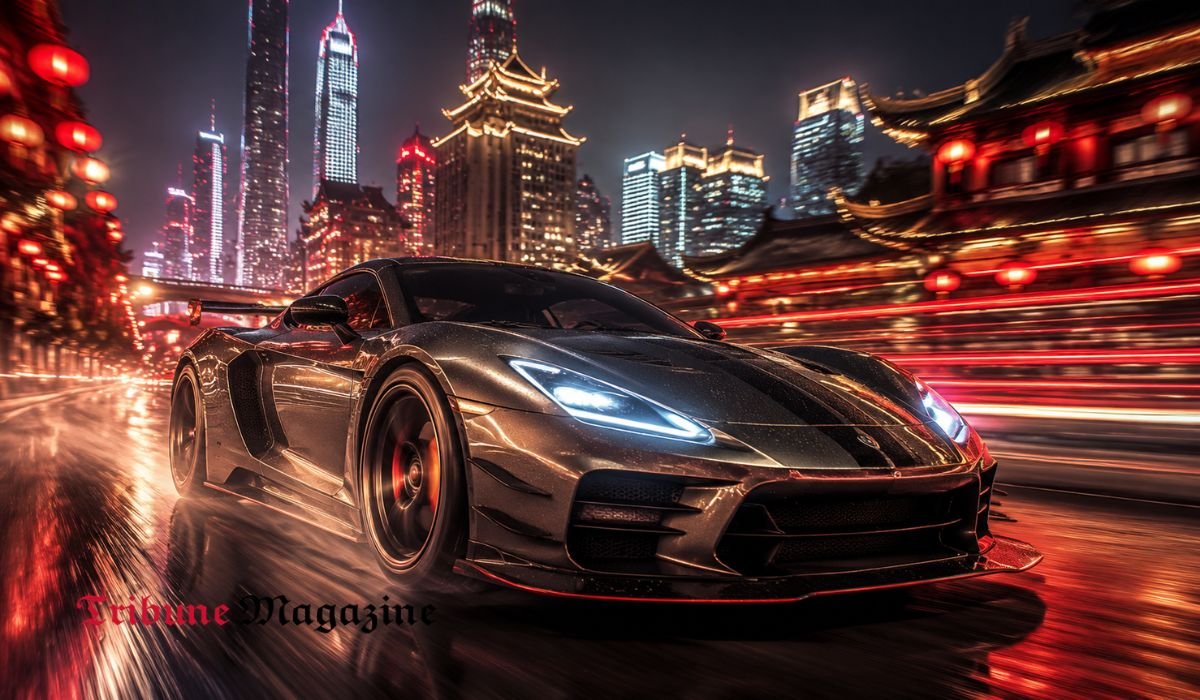
Every so often, a strange-looking word appears in search results and leaves people puzzled. Jipinfeiche is one of those words. It looks like a brand name, sounds like a product, and shows up in gaming chats, short videos, and comment sections without any explanation attached. Many readers assume it must be a new app, a car company, or a private club overseas. The truth is simpler. It is a Chinese phrase, written out in the Latin alphabet, and it belongs to one of the most famous racing game series ever made.
If you have ever played a street racing game with police chases, neon lights, and heavily modified cars, you already know the series this term points to. In mainland China, that series is not called Need for Speed. It carries a local name that players there have used for decades. When that name travels outside China through streams and clips, it gets typed out in plain letters, and the confusion begins.
What This Chinese Term Actually Means
The phrase comes from written Chinese, where it appears as 极品飞车. Spoken aloud in Mandarin, it is romanized as Jípǐn Fēichē, which is simply a way of writing Chinese sounds using the alphabet English readers already know. Once the tone marks and the space between the two halves are dropped, which happens constantly online, you get the single-word version that so many people are now searching for. That is why the term looks unfamiliar even to people who speak Mandarin. The meaning itself is easy to grasp: a car of the highest possible quality, moving at incredible speed.
Breaking Down the Two Parts
Chinese phrases often work like building blocks, where each character carries its own meaning and the combination becomes richer than a direct translation suggests. The first part, 极品, means top grade, premium, or best in class. It is the sort of word used for luxury goods, rare items, and anything considered the finest example of its kind. The second part, 飞车, literally points to a flying car, though in everyday use it describes a vehicle moving at extreme speed. Put together, the two halves land close to “premium fast car.” That may sound plain in English, but in Chinese it carries real weight, suggesting precision engineering and raw power.
Why the Racing Series Got a Different Name in China
Game titles rarely translate word for word. A direct translation of “Need for Speed” into Chinese would sound clumsy and abstract, closer to a personal craving than a racing series. Localization teams face this problem constantly. Their job is not to copy the words but to carry the feeling across, so a player in Shanghai gets the same rush from the title that a player in Chicago gets from the original.
The chosen name solved that problem cleanly. Instead of describing a feeling, it describes the thing itself: a beautiful, fast, expensive car. Chinese players saw the title on store shelves, magazine covers, and internet cafe screens, and they instantly understood what kind of game it was. The name stuck so well that for millions of players, it is the only name the series has ever had. English speakers know one title, Chinese speakers know another, and both groups are talking about the same cars, the same night races, and the same police pursuits.
A Quick Look at the Franchise Behind the Name
The series this phrase refers to has been running since the mid-1990s and has grown into one of the longest-lasting names in racing games. It started on early consoles and computers, then spread to nearly every platform capable of running a racing engine. Along the way it shaped how street racing is shown in games, from deep customization menus to dramatic chase sequences. Here are the highlights that define its long run:
- Debuted in 1994 and became one of its publisher’s oldest non-sports franchises
- Built its reputation on street racing, police chases, and detailed car customization
- Expanded into open-world driving, drift events, and online competition over time
- Released a free-to-play mobile entry in 2015 that reached a huge global audience
- Delivered its most recent mainline installment in late 2022 with a bold visual style
- Paused mainline development in early 2025 while the studio shifted to another project
- Keeps a separate, actively supported presence in the Chinese mobile market
The Mobile Side of the Story
There is a second reason this term keeps appearing in search results, and it has nothing to do with older console games. A newer open-world racing game for phones carries the same Chinese name with an extra word attached, and it is aimed squarely at players in China and other Chinese-language markets. It offers a large map, detailed car customization, social features, pursuit-style gameplay, and tools that let players create their own content.
This matters because it splits the reason people search in two. Some want a translation and nothing more. Others have seen clips of that mobile game and want to know how to play it themselves. Because the mobile title is region-specific, players outside those markets usually cannot download it through their normal app store, which leads to more confusion and more chances to land on unreliable download pages run by strangers.
Why the Term Is Trending Right Now
Language moves faster than it used to. A Chinese streamer says a title out loud, a short clip crosses into feeds in the United States and Europe, and suddenly thousands of people are typing an unfamiliar string of letters into a search bar. Gaming culture is one of the most connected spaces online, and terms cross borders there fast. There is also a practical reason. Very few well-researched pages explain this one properly, so results have filled up with vague articles calling it a cooking tradition, a village, or a business philosophy. None of that is accurate, and that gap between real curiosity and poor answers keeps people searching.
Common Misunderstandings Worth Clearing Up
The most common mistake is treating the phrase as a brand new invention. It is not. It has been in regular use among Chinese players since the late 1990s and early 2000s. Another frequent error is assuming it belongs to a company, a website, or a startup framework. No registered global platform operates under this name in English-speaking markets, and any page presenting it as a management method is simply guessing. A third misunderstanding involves the writing itself. Seeing the phrase as one long word makes it look like a proper noun, so readers assume it must be somebody’s name. Separate the two halves mentally and the mystery disappears.
How to Say It Out Loud
Pronunciation trips people up more than meaning does. A rough English approximation is “jee-peen fay-chuh.” The opening sound is close to the j in jeep rather than a hard g. The second syllable rhymes loosely with “seen,” the third sounds like “fay,” and the last is a soft “chuh” instead of a hard “chay.” Mandarin also uses tones, which shift meaning depending on pitch, so a native speaker will say it with a rising and falling pattern that English does not have. Getting the syllables roughly right is enough for most listeners to know exactly which series you mean.
Finding the Right Game Without Getting Burned
If your goal is to actually play something, the safest path is to ignore the romanized phrase entirely and search using the English series name on official storefronts. Official console stores and major computer gaming platforms list the mainline titles under their familiar English names, which avoids the mirror sites and file-hosting pages that tend to appear around unusual terms. For the phone game tied to the Chinese title, regional restrictions are real and worth respecting. Installing files from unofficial sources is risky, since those packages can carry malware or account-stealing tools. A racing game is not worth handing your device or your login details to a stranger.
What This Name Teaches Us About Localization
There is a bigger lesson buried in this small phrase. Good localization is not translation. It is a creative decision about what a name should make people feel in a different culture. The Chinese title works because it swaps an abstract craving for a concrete image, and that image happens to be the exact thing the games sell. This example also shows how large the Chinese gaming market has become. With hundreds of millions of active players, a local title is not a footnote. It is the primary name for a huge share of the audience.
Final Thoughts
Strip away the mystery and you are left with something refreshingly simple. This phrase is the Chinese name for a racing game series that English speakers have known for thirty years under a different title. It means “premium fast car,” it was chosen because it captures the spirit of the games better than a literal translation ever could, and it spread beyond China because gaming culture no longer respects borders. The next time an unfamiliar term shows up in your feed, it may not be a secret product or a hidden trend. It may just be a familiar thing wearing a different name in another language, and knowing that turns a confusing search into a small, satisfying piece of knowledge.
Frequently Asked Questions
What does Jipinfeiche mean in English?
It translates roughly to “premium fast car” or “top-quality speeding vehicle.” The first half means top grade or best in class, and the second half describes a car moving at extreme speed. Together they form the Chinese name used for the Need for Speed racing series.
Is it the same thing as Need for Speed?
Yes. It is the official Chinese title for the same franchise, not a copy or a rival product. English-speaking players know the series by its original name, while Chinese players have known it by this one for decades.
Is it a website, app, or company?
No. There is no verified global website, brand, or business operating under this name in English-speaking markets. Pages describing it as a productivity system, a management framework, or a food tradition are inventing content.
How do you pronounce it correctly?
A close English approximation is “jee-peen fay-chuh.” The first sound resembles the j in jeep, and the final syllable is soft rather than sharp. Mandarin adds tonal pitch changes, but casual listeners will understand you without them.
Why does Need for Speed have a different name in China?
A word-for-word translation of the English title would sound vague and unnatural in Chinese. The local name describes the actual appeal of the games instead: fast, expensive, beautifully built cars. That made it far more memorable for players there.
Is there a mobile game connected to this name?
Yes. A newer open-world racing game for phones uses the same Chinese title with an added word and targets Chinese-language markets. It features a large map, car customization, social play, and pursuit gameplay, but it is region-restricted.
Can I play the Chinese mobile version outside China?
Usually not through normal app stores, since regional licensing limits where it can be distributed. Downloading installation files from unofficial sites is risky and can expose your device to malware or account theft. Waiting for an official regional release is the safer choice.
Why is this term trending in search results now?
Short video clips and live streams from Chinese players have introduced the phrase to viewers in the United States, the United Kingdom, and elsewhere. Curiosity about the unfamiliar spelling drives searches, and the shortage of accurate explanations keeps people looking.
Don’t Miss This: Pbmethd Com Review 2026: Features, Safety, and Real User Insights