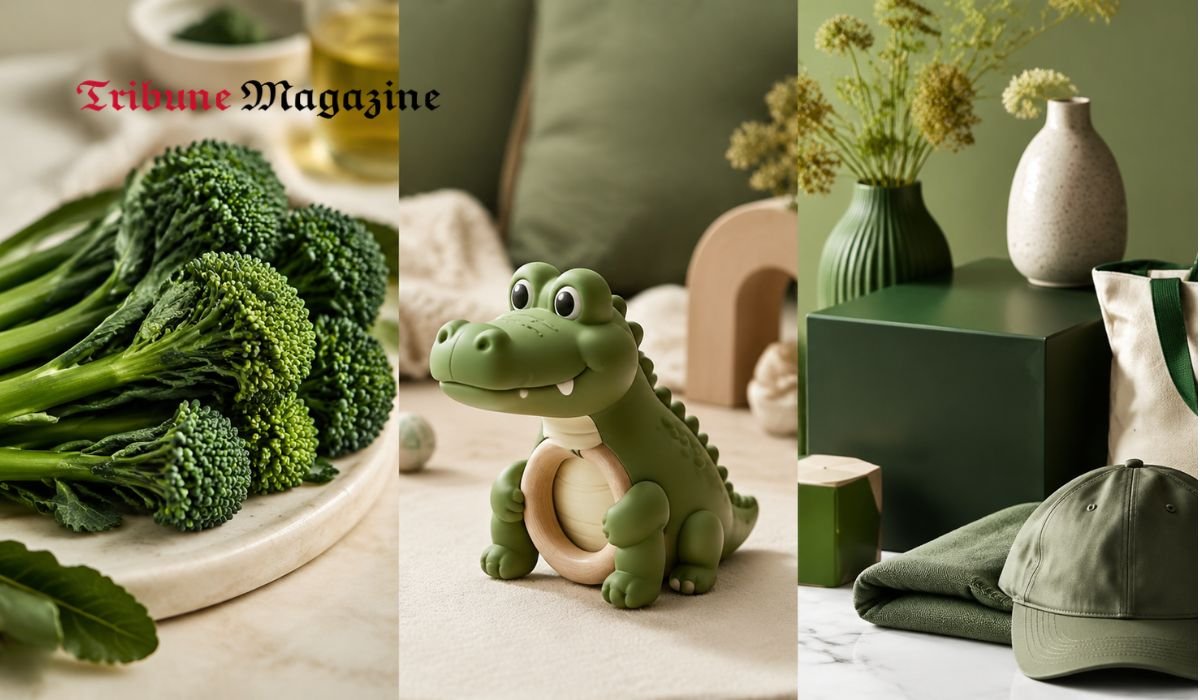
A strange thing happens when a word starts appearing everywhere at once. You see it on a restaurant menu, then in a baby store, then in a social media caption, and each time it seems to mean something different. That is what has happened with crocolini. Over the past year the term has moved from quiet food blogs into everyday online conversation, and many people look it up simply because they spotted it somewhere and had no idea what it was. If that is why you are here, you are far from alone.
The honest answer is that the word does not have one fixed meaning yet. It sits at the early stage where a name is still being pulled in several directions by cooks, parents, shoppers, and small brands. Most often it describes a slim green vegetable that looks like a delicate version of broccoli. It also appears on crocodile-themed baby toys, and on a handful of small clothing and gift labels. This guide explains each meaning in plain language and gives you a simple way to tell them apart.
What Is Crocolini?
In food, crocolini is a hybrid green with long thin stalks, small loose florets, and soft edible leaves. It belongs to the same plant family as broccoli, cabbage, kale, and cauliflower, and it comes from conventional crossbreeding rather than laboratory work. Growers crossed standard broccoli with a leafy Asian green, usually described as Chinese kale or gai lan, to combine the nutrition of one plant with the tenderness of the other. The aim was practical: faster cooking, less waste, and a milder taste for people who find older greens tough or bitter.
You will find disagreement online about the exact parent plants. Some pages name kale instead of gai lan, and others treat the word as a simple alternative for broccolini. That is normal for a young produce name, because seed companies and retailers label similar crosses in different ways. For anyone cooking at home, the distinction matters far less than the result on the plate. What you buy is a tender stem vegetable that behaves the same way in a hot pan, whichever label the store happened to print on the band.
What It Looks Like and How It Tastes
The vegetable is easy to recognize once you have seen it. The stalks are smooth and slim, about the thickness of a pencil, and they finish in small open florets instead of the dense crown you get on a broccoli head. A few soft leaves grow along the stem, and those are edible too. Nothing needs peeling except the dry base of the stalk. The flavor is mild, faintly sweet, and gently grassy, without the sulfur bite that makes some children push broccoli to the edge of the plate.
Nutrition and Health Value
Nutritionally it follows the pattern of its plant family: low in calories, high in fiber, and rich in vitamin C, vitamin K, folate, and plant pigments the body turns into vitamin A. It also supplies potassium along with modest amounts of calcium and iron. Because the whole plant is edible, more of that value reaches your plate. Cruciferous vegetables are also studied for natural sulfur compounds linked with antioxidant activity, though no single ingredient works magic. Treat it as an easy way to raise your daily vegetable intake, not as a cure for anything.
Crocolini vs Broccolini: The Difference People Ask About
This comparison is the question people ask most. Broccolini is an established cross between broccoli and Chinese broccoli that has been sold for decades, sometimes under trademarked names. The newer term either describes a slightly different cross or gets used loosely for the same style of tender stem broccoli. Where a difference is claimed, it comes down to texture and taste: thinner stalks, more leaf, and a sweeter, softer bite. If your store stocks one and your recipe names the other, swap them. Cooking times and results are close enough that most eaters never notice.
How to Cook It Well
Speed is the main rule. Three to seven minutes of heat is usually enough, and almost every complaint about this vegetable comes from cooking it too long. The classic method is a hot pan with olive oil, sliced garlic, and salt: give the stalks a minute or two to blister, then add the leafy tops so they wilt at the end, and finish with lemon. Roasting at high heat until the tips crisp works just as well. Steaming keeps the color bright, and a ninety-second blanch is ideal before adding it to a cold salad.
Quick Highlights and Everyday Uses
The name turns up in more places than the produce aisle. These are the settings where you are most likely to meet it:
- Weeknight side dishes: sautéed with garlic, chili flakes, and lemon in under ten minutes
- Meal prep: blanched and stored for salads, grain bowls, and packed lunches
- Restaurant plating: served as a bright green side beside fish, steak, chicken, or pasta
- Family meals: chosen by parents because the mild taste is easier for children to accept
- Home gardens: grown in cool seasons by hobby gardeners who want fast, repeat harvests
- Baby products: used as a product name for wooden toys, teethers, and pacifier clips
- Small brands: picked by clothing, accessory, and gift labels for its playful European sound
The Baby Toy Meaning
A second group of searches comes from parents rather than cooks. Nursery and toy makers have used the name for crocodile-themed items such as wooden pull-along toys, teethers, rattles, and pacifier clips. The word suits that market well: soft-sounding, short enough for packaging, and friendly rather than fierce. Products in this category usually stress rounded edges, natural wood, and non-toxic finishes. Keep in mind that no single company owns the name, so it tells you nothing about quality on its own. Check the maker, the age rating, and the safety marks on the box.
The Lifestyle and Brand Meaning
The third use is the loosest. Because the word carries an Italian rhythm and ends on a light, memorable note, small clothing lines, accessory shops, cafés, and design studios have adopted it as a business name. Here it describes no product type at all; it simply signals something stylish, warm, and a little playful. This pattern is common online. An unusual word with little competition becomes valuable as an identity, so several unrelated businesses pick it up at once, which is exactly why the results you find look so scattered.
Why the Term Is Trending in 2026
Interest has grown for a few overlapping reasons. Tender stem greens fit the way people cook now: quickly, with few steps and little waste. Short recipe videos spread the look of the vegetable faster than its name, so viewers went hunting for it afterward. Curiosity accounts for much of the rest, since an unfamiliar word on a menu or a label invites a quick lookup. Telling the meanings apart is simple. Cooking and grocery words point to the vegetable, nursery words point to a toy, and sizing or shipping words point to a brand.
Buying, Storing, and Growing
In a store, look for firm stalks, tight florets, and leaves with no yellowing. Limp stems and open, flowering heads mean the bunch has sat too long. Availability still varies by region, and farmers markets often carry it before large chains do. At home, keep it unwashed in the refrigerator, wrapped in a damp paper towel inside a loose bag, where it holds for four or five days. Gardeners can grow it from seed in cool weather, cutting the central stem first so smaller side shoots keep coming for weeks.
Final Thoughts
The most useful thing to understand is that this is a word in motion. It has not settled into a single definition, and for now it genuinely serves three audiences at once. That is not misinformation; it is what happens when a short, pleasant name arrives before any industry claims it. If your interest is food, the takeaway is easy: a mild, quick-cooking green with real nutrition and almost no prep. If your interest is a toy or a label, judge the product itself rather than the name. Either way, you can now recognize which version you have found.
Frequently Asked Questions
Is crocolini the same thing as broccolini?
In most stores they are close enough to treat as the same product. Both are tender stem greens bred from broccoli and an Asian leafy vegetable, and both cook the same way. Some growers describe crocolini as sweeter and softer, but you can swap one for the other in any recipe.
Is it genetically modified?
No. It comes from conventional crossbreeding, the same method farmers have used for centuries to improve flavor, texture, and yield. That process means pollinating one plant with another and selecting the best results over several generations. It is completely different from laboratory gene editing.
Can you eat the leaves and stems?
Yes, and that is one of its main advantages. The stems, florets, and leaves are all edible, so waste is minimal. You only need to trim the very bottom of the stalk if it feels dry or woody. Everything above that goes straight into the pan.
How long does it take to cook?
Very little time. Sautéing takes about three to five minutes, roasting eight to ten at high heat, and steaming around four. Overcooking is the most common mistake and leaves the stems limp and dull. Take it off the heat while the stalks still have a slight bite.
Is it a good vegetable for children?
It works well for family meals because the flavor is mild and the texture is soft, and many parents find children accept it more easily than regular broccoli. For young toddlers, chop the stems small and cook them until fully tender so they are easy to chew.
Why do some results show baby toys instead of vegetables?
Because the same word is used as a product name for crocodile-themed nursery items like wooden pull toys, teethers, and pacifier clips. No single company owns the term, so unrelated products share it. Look at the words around it in any listing to see which category you are viewing.
Where can I buy it?
Check specialty grocers, farmers markets, and the fresh produce section of larger supermarkets, especially those that stock premium or imported vegetables. Availability changes by season and region, so it may not appear year round. If you cannot find it, tender stem broccoli is a direct substitute.
How should I store it after buying?
Keep it unwashed in the refrigerator, wrapped in a slightly damp paper towel and placed inside a loose produce bag. This stops the stems from drying out while still allowing airflow. Stored that way it stays fresh for roughly four to five days. Wash it only right before cooking.
Don’t Miss This: The Untold Story of Anya Robbie, Margot Robbie’s Sister