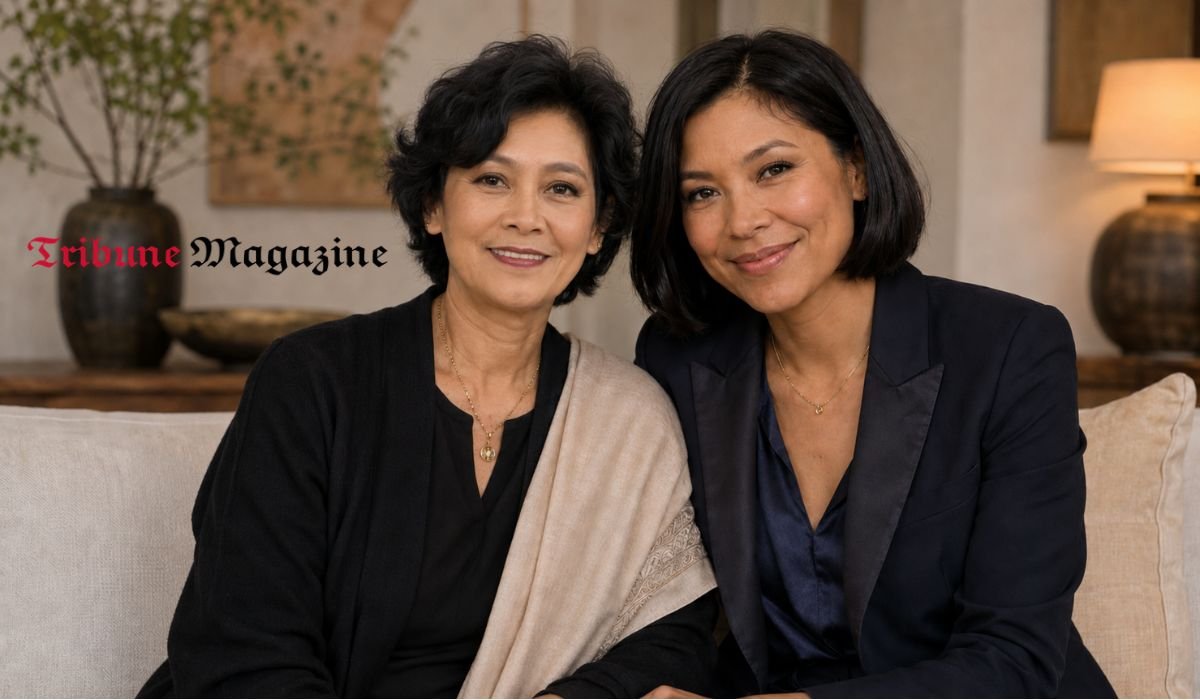
Tin Swe Thant is best known publicly as the mother of American journalist, author, and television personality Alex Wagner. However, describing her only through her famous daughter overlooks the remarkable cultural journey behind her name. Born near Rangoon—now Yangon—in Burma, now Myanmar, she came of age during the country’s transition away from British colonial rule. She later immigrated to the United States, attended Swarthmore College, and built a multicultural family with political consultant Carl Wagner. Although Tin Swe Thant has largely remained outside the public spotlight, her Burmese heritage, immigration experience, and approach to identity profoundly influenced Alex Wagner’s upbringing and her acclaimed book, Futureface.
Quick Information About Tin Swe Thant
| Information | Details |
|---|---|
| Full name | Tin Swe Thant |
| Known for | Being Alex Wagner’s mother |
| Relationship to Alex Wagner | Mother |
| Birthplace | Near Rangoon, Burma |
| Modern birthplace name | Yangon, Myanmar |
| Nationality | Burmese American |
| Heritage | Burmese |
| Immigration period | Late 1960s |
| U.S. citizenship | Naturalized American citizen |
| College | Swarthmore College |
| Field of study | Political science |
| Husband | Carl Wagner |
| Daughter | Alexandra Swe Wagner |
| Grandchildren | Alex Wagner’s two sons |
| Public profile | Primarily private |
| Cultural significance | A major influence on Alex Wagner’s understanding of identity |
Who Is Tin Swe Thant?
Tin Swe Thant is a Burmese-born American woman whose family story became widely known through the work of her daughter, Alex Wagner. She is not a television personality, politician, or public-facing celebrity herself. Most reliable information about her comes from Alex’s essays, interviews, and family-history writing. Tin Swe Thant was born outside Rangoon during the closing years of British colonial influence in Burma. Her life later crossed continents when she moved to the United States and pursued higher education. This experience placed her between two cultural worlds, making her an important figure in Alex’s exploration of belonging, migration, race, and inherited identity.
Early Life Near Rangoon, Burma
Tin Swe Thant was born near Rangoon, a humid port city situated in the Irrawaddy River delta. Today, the city is called Yangon, and the country is officially known as Myanmar. Her childhood unfolded while British colonial customs still influenced Burmese schools and social institutions. Alex Wagner later explained that her mother attended English-language schools where students were expected to use Western names. That seemingly small requirement reflected a much larger colonial system in which local identities were frequently reshaped to fit British expectations. Tin Swe Thant’s early experiences therefore provide valuable context for understanding why names, heritage, and cultural authenticity later became meaningful subjects within her family.
Why She Was Called Maureen at School
One of the most memorable stories from Tin Swe Thant’s childhood concerns the name “Maureen.” When her father, U Thant Gyi, enrolled her in an English school, administrators reportedly asked for her English name. Unprepared for the question, he selected Maureen O’Hara, the name of a well-known Hollywood actress. Tin Swe Thant was consequently called Maureen at school instead of using her Burmese name. Alex Wagner later discussed this family story in an essay for The Atlantic, using it to illustrate how colonial expectations could affect something as personal as a child’s name. In America, however, Tin Swe Thant reclaimed and consistently used her real name.
Her Move to the United States
Tin Swe Thant arrived in the United States during the late 1960s, a period marked by intense social and political change. The civil rights movement, protests against the Vietnam War, the women’s movement, and a growing youth counterculture were challenging long-established institutions. For a young immigrant from Burma, entering American society during this era likely meant encountering both unfamiliar freedoms and difficult questions about race and belonging. Publicly available accounts do not provide every detail about her immigration process, and responsible profiles should not invent them. What is documented is that she became a naturalized U.S. citizen before beginning her studies at Swarthmore College.
Education at Swarthmore College
Tin Swe Thant attended Swarthmore College in Pennsylvania, one of the country’s respected liberal arts institutions, and majored in political science. Her choice of subject placed her close to debates about government, power, international affairs, and social change. At Swarthmore, she enrolled under her Burmese name rather than the Western school name imposed during her childhood. Alex has written that “Maureen” does not appear in her mother’s college transcripts. During the energetic atmosphere of early-1970s American counterculture, Tin Swe Thant reportedly embraced contemporary clothing and developed Marxist political views. These details reveal an intellectually curious young woman actively engaging with the ideas circulating in her adopted country.
Marriage to Carl Wagner
Tin Swe Thant married Carl Wagner, an American political strategist from Lansing, Iowa. He came from a Midwestern family with Luxembourgish, German, and Irish roots, creating a household that united Burmese and European-American traditions. The precise circumstances of their meeting and wedding have not been extensively documented, so claims about a romantic origin story should be treated cautiously. What is clear is that their marriage formed the multicultural foundation of Alex Wagner’s childhood. Carl built a prominent career in Democratic politics, while Tin Swe Thant contributed a very different geographical and cultural history to the family. Together, their backgrounds gave their daughter an unusually broad perspective on American identity.
Who Was Carl Wagner?
Carl Wagner was a veteran Democratic political consultant who worked on major national campaigns. His career included involvement with Senator Edward Kennedy’s 1980 presidential campaign, and he later co-chaired Bill Clinton’s successful 1992 presidential campaign. His professional life brought political strategy, elections, and public policy into the family environment. Carl died in 2017 at age 72, according to his published obituary. Tin Swe Thant’s political-science education and Carl’s campaign work meant that Alex grew up in a home where political ideas were not remote abstractions. That environment likely helped cultivate her interest in public affairs, even though her eventual career developed through journalism rather than political consulting.
Mother of Alex Wagner
Tin Swe Thant is the mother of Alexandra Swe Wagner, who was born in Washington, D.C., on November 27, 1977. Alex is reported to be the couple’s only child, and her middle name, “Swe,” creates a visible connection to her mother’s Burmese name. Alex grew up in Washington and later graduated from Brown University after studying art history and literature. She went on to work as an editor, correspondent, television host, political analyst, and author. Her career has included roles with The Fader, the Center for American Progress, MSNBC, CBS News, The Atlantic, Showtime’s The Circus, and Netflix’s revival of The Mole.
Their Mother-Daughter Relationship
Tin Swe Thant and Alex Wagner share a mother-daughter relationship shaped by affection, cultural inheritance, and questions that became more important as Alex grew older. Tin gave her daughter a direct connection to Burma, yet Alex has explained that she did not always possess a complete understanding of that ancestry. Like many children in immigrant families, she inherited stories, customs, and fragments of memory rather than a perfectly organized historical record. That absence did not indicate a lack of closeness. Instead, it showed how displacement can interrupt the transmission of family history. Alex eventually approached those missing pieces with the instincts of a journalist, asking what had been preserved, what had changed, and what remained unknowable.
Burmese Heritage in Alex Wagner’s Childhood
Alex Wagner grew up with a Burmese mother and a white Midwestern father, making her identity both distinctly American and connected to multiple ancestral traditions. She has discussed how being multiracial affected the way she understood herself, particularly during a period when mainstream American culture had fewer familiar descriptions for mixed-race identities. As a teenager, she saw a computer-generated multiracial woman on a 1993 Time magazine cover and felt that the image resembled her. The encounter offered recognition, but it did not answer deeper questions about origin and belonging. Those questions eventually led her back toward Tin Swe Thant’s history and the Burmese branch of her family.
Tin Swe Thant’s Influence on Futureface
Tin Swe Thant’s life is central to Futureface: A Family Mystery, an Epic Quest, and the Secret to Belonging, Alex Wagner’s 2018 book. The project follows Alex’s investigation into both sides of her ancestry and examines the limitations of family legends, genealogical evidence, and genetic testing. Her mother’s journey from Burma to America provides one of the book’s essential narrative threads. Rather than presenting heritage as a collection of simple answers, Alex shows how family history can contain silence, contradiction, colonial disruption, and uncertainty. The birth of her first son intensified her desire to investigate because she wanted to pass along an honest account of where their family came from.
Identity, Names, and Cultural Belonging
The story of Tin Swe Thant demonstrates why a name can carry historical and emotional meaning. As a child, she was required to answer to an English name selected under colonial pressure. As a college student in America, she used Tin Swe Thant officially and openly. That progression turns her name into a symbol of cultural continuity: it survived migration, political upheaval, and institutional efforts to replace it. For Alex, her mother’s experience offered a concrete example of how identity is shaped not only by personal preference but also by governments, schools, borders, and family memories. It helps explain why Alex’s writing treats belonging as something deeper than appearance or ancestry percentages.
Her Influence on Alex Wagner’s Journalism
It would be inaccurate to credit every part of Alex Wagner’s career to her mother, but Tin Swe Thant’s history clearly supplied important intellectual material. Alex’s journalism frequently engages with American politics, race, immigration, culture, and national identity—the same broad forces that intersect in her family story. Growing up with a Burmese immigrant mother and a father active in Democratic politics gave her an immediate view of how private lives connect with public events. Her work as a journalist reflects a willingness to examine contradictions rather than force complicated subjects into easy categories. That quality is particularly evident when she writes about her family, where emotional attachment must coexist with careful investigation.
A Private Life Outside the Spotlight
Despite public curiosity, Tin Swe Thant has maintained a comparatively private life. Reliable sources do not provide a confirmed birth date, current age, occupation, personal net worth, or detailed record of her siblings. Her privacy should not be treated as missing celebrity information that writers are free to fill with assumptions. Many online profiles repeat unsupported claims about her finances, profession, age, and personal activities without identifying credible evidence. The most trustworthy picture comes from documented facts: she was born near Rangoon, immigrated to America, became a naturalized citizen, studied political science at Swarthmore, married Carl Wagner, and raised their daughter Alex in Washington, D.C.
Tin Swe Thant as a Grandmother
Tin Swe Thant is also part of another generation of the family as the grandmother of Alex Wagner’s two sons. Alex welcomed her children during her marriage to former White House chef and nutrition-policy adviser Sam Kass. In interviews about Futureface, Alex explained that motherhood made questions of ancestry feel more urgent. She wanted to offer her children a family account grounded in investigation rather than merely repeating polished stories. Tin Swe Thant’s childhood in Burma, her migration to America, and Alex’s multicultural upbringing now belong to the inheritance of those children. Her legacy therefore continues not through fame but through names, memories, research, and conversations passed between generations.
Why Tin Swe Thant’s Story Matters
Tin Swe Thant’s experience carries significance beyond her relationship with a well-known journalist. Her story touches on British colonial influence in Burma, Asian immigration to the United States, naturalization, multicultural marriage, and the challenges families face when preserving history across borders. It also complicates the familiar idea that immigration produces a neat transition from one identity to another. Tin did not simply leave a Burmese identity behind and adopt an American one. Her life incorporated both, while her daughter inherited a related but distinct experience. That layered history reflects the reality of many American families whose identities cannot be summarized by one country, culture, race, or surname.
Conclusion
Tin Swe Thant is Alex Wagner’s mother, but her importance extends well beyond that simple connection. Born near Rangoon and educated first under colonial expectations, she later immigrated to the United States, reclaimed her Burmese name, studied political science at Swarthmore College, and created a multicultural family with Carl Wagner. Her experiences helped shape Alex Wagner’s understanding of politics, ancestry, immigration, and belonging. They also became a central part of Futureface, through which Alex examined what families preserve and what history obscures. Tin Swe Thant remains a private individual, yet her journey offers a meaningful portrait of cultural resilience and the lasting influence a mother’s history can have on future generations.
Frequently Asked Questions
Who is Tin Swe Thant?
Tin Swe Thant is a Burmese-born naturalized American citizen and the mother of journalist Alex Wagner. She is primarily known through Alex’s published discussions of their family history and Burmese heritage.
How is Tin Swe Thant related to Alex Wagner?
Tin Swe Thant is Alex Wagner’s mother. Alex is the daughter of Tin Swe Thant and the late Democratic political consultant Carl Wagner.
Where was Tin Swe Thant born?
She was born just outside Rangoon in Burma, the city and country now known as Yangon, Myanmar. Her childhood was influenced by the educational customs that remained from British colonial rule.
Where did Tin Swe Thant study?
Tin Swe Thant studied political science at Swarthmore College in Pennsylvania. She attended under her real Burmese name after becoming a naturalized U.S. citizen.
Who was Tin Swe Thant’s husband?
Her husband was Carl Wagner, a Democratic political strategist from Iowa. He participated in several major campaigns and co-chaired Bill Clinton’s 1992 presidential campaign.
What is Tin Swe Thant’s net worth?
No credible public source has established Tin Swe Thant’s personal net worth. Because she has maintained a private life, specific financial estimates published without supporting evidence should not be treated as verified.
Don’t Miss This: Who Is D’nette Bassett? Meet Angela Bassett’s Supportive Sister